
Who Gets to Invest? Understanding the Reality of Financial Participation
Oct. 14, 2026
Confidence, social norms and access to financial knowledge were on the agenda at an SSE Alumni Office breakfast event, bringing together researchers from the Swedish House of Finance (SHoF) and industry practitioners.
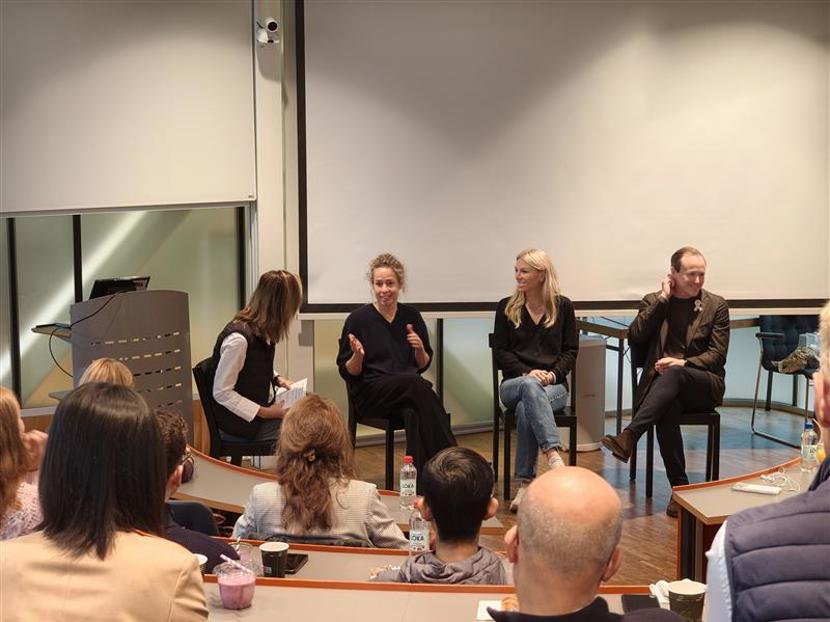
Marieke Bos (SHoF) delivered the keynote before joining Christine Ahlstrand (Course Corrected VC and DHS Venture Partners), and Mattias Munter (Skandia) for a panel discussion. Anastasia Girshina (SHoF) moderated the conversation.
What Shapes Financial Participation?
Bos examined whether gender differences in investing reflect preferences or the environments in which people learn about finance. She presented research suggesting that confidence, social context, and early encouragement help explain differences in participation and risk-taking.
Financial literacy tests, for example, may capture uncertainty as well as knowledge: women more often choose “I don’t know,” even when they may know the answer. Bos also highlighted Danish research showing that parents were more likely to open stock accounts for sons than daughters, suggesting that unequal exposure can begin early.
“My takeaway is really that there is some evidence that women are not born more risk-averse or less interested in investing,” Bos said.
How Can Participation Be Broadened?
Ahlstrand discussed how representation across the venture capital investment chain can influence which founders receive funding. She argued for greater diversity among investment decision-makers and emphasized early financial education to build familiarity and confidence.
Munter highlighted the role of pensions in connecting Swedish households to financial markets, while noting that many people remain disengaged from their pension savings. He suggested that employers make occupational pension contributions visible on pay slips to help employees understand their total compensation and long-term savings.
“Time beats timing every time,” Munter said, emphasizing the importance of consistent saving and a long investment horizon.
The discussion highlighted shared responsibility among families, schools, employers, and financial institutions, including clearer information about pension contributions and fees. The program concluded with audience questions and networking.