
Magnus Dahlquist Contributes to Independent Review of Danish Pension Giant ATP
Jun. 24, 2026
Magnus Dahlquist (SHoF/SSE) contributes to an external expert evaluation of ATP’s investment strategy. The review examines how ATP can continue to manage pension assets effectively in a changing financial and institutional environment.
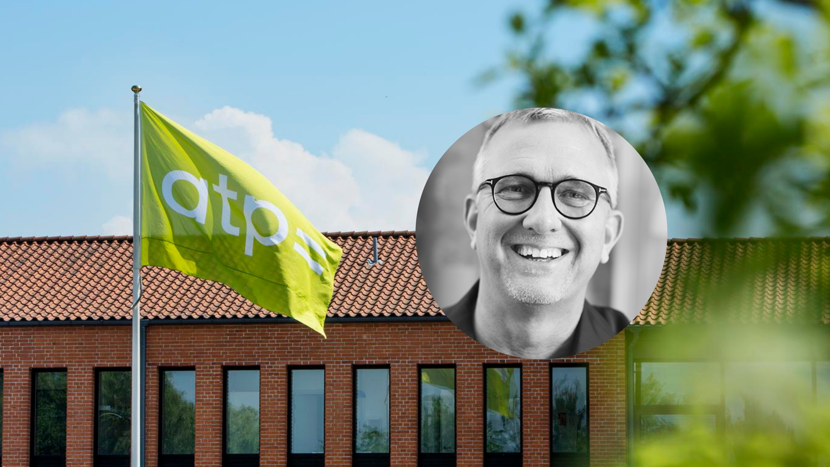
ATP manages pension assets for Danish savers and provides a statutory pension supplement, investing contributions over long horizons. The scale of its mandate—and the number of Danes it covers—makes its investment decisions relevant to wider discussions about European pension policy.
The report, presented on June 24, was commissioned by ATP and chaired by Jesper Berg, former director general of the Danish Financial Supervisory Authority. Andrew Ang, previously a professor at Columbia Business School and Managing Director and Head of Factors, Sustainable and Solutions at BlackRock, was also a member of the evaluation group.
The review follows changes to ATP’s pension product and investment model. It examines how ATP can continue to generate long-term returns while managing risk and meeting its obligations to savers.
The report concludes that ATP plays an important role in the Danish pension system and that its investment beliefs and overall investment strategy are largely in line with best practice. It says ATP’s distinctive role—providing lifelong, prefunded and guaranteed pensions—means its performance cannot be assessed in the same way as a market-based occupational pension fund.
At the same time, the report identifies elements of ATP’s investment strategy that should be reconsidered. These include the level of risk in the Investment Portfolio, the complexity and risks linked to the Supplementary Hedge Portfolio, the framework for illiquid investments, the allocation to Danish equities, the use of benchmarks, and the way ATP communicates its performance and risks.
The report recommends that ATP maintain its core investment beliefs and its separation between a Hedge Portfolio and risk-seeking portfolios. It also recommends that ATP reconsider its beliefs on illiquid assets, review the total level of risk in the Investment Portfolio, prioritize the Market Return Portfolio over the Supplementary Hedge Portfolio if risk-taking is reduced, develop stronger frameworks for illiquid investments and Danish equities, adopt a more return-focused investment framework, and improve its communication to members and the public.
The report says these recommendations would support a clearer assessment of ATP’s performance, improve transparency around risk and returns, and help align public understanding with ATP’s long-term pension objective.
“Large pension funds have to balance long-term return objectives with risk, governance, and the interests of pension savers,” says Dahlquist. “The review provides a structured way to assess whether ATP’s investment approach remains aligned with those objectives.”
Dahlquist’s research spans asset management, asset pricing, and international finance. His current research examines institutions’ capital market assumptions, the design of pension plans, and trading strategies in bond and foreign exchange markets. He also serves on the newly established Expert Council advising Norway’s Ministry of Finance on the management of the Government Pension Fund Global, one of the world’s largest sovereign wealth funds.