
Central Questions EP. 4: When Does a Boom Become a Crisis? Robin Greenwood on AI, Bubbles and the “Red Zone”
Aug. 19, 2026
Robin Greenwood (Harvard Business School) joins former Riksbank Governor Stefan Ingves to unpack why bubbles form, why they often start with something genuinely transformative, and what turns a boom into a real economic threat.
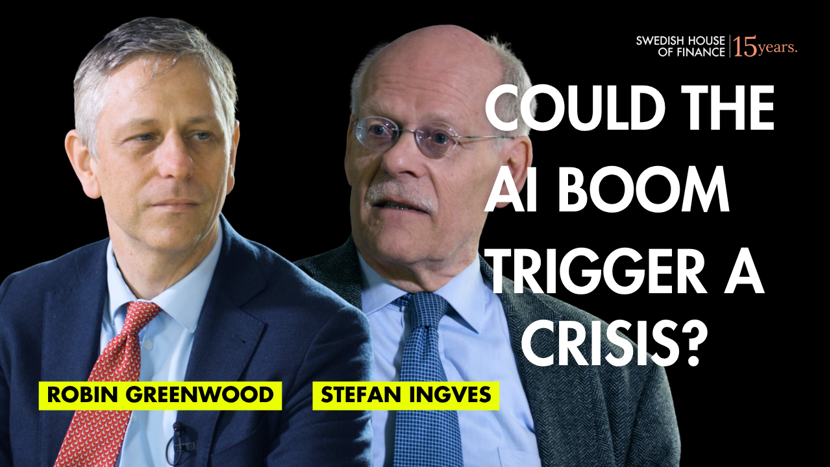
Is the AI boom a bubble, and should we be worried?
Robin Greenwood (Harvard Business School) joins former Riksbank Governor Stefan Ingves to unpack why bubbles form, why they often start with something genuinely transformative, and what turns a boom into a real economic threat.
From dot-com to the 2008 Global Financial Crisis to today's AI buildout, Greenwood argues rising prices alone aren't the danger. It's when booms collide with rapid credit growth and leverage that things turn risky. They dig into why even seasoned investors get swept up, how competition undermines "unstoppable" growth stories, cracks forming in private credit, and whether policymakers can catch trouble in time.
Greenwood also breaks down the "red zone," periods when credit growth and asset prices rise together, historically pushing the odds of a financial crisis within three years from about 8% to 40%.
They discuss: as AI spending increasingly needs outside financing, could this largely equity-funded boom turn into something riskier?
Watch on YouTube
Listen on Spotify
Listen on Apple Podcasts
Guest: Robin Greenwood is the George Gund Professor of Finance and Banking at Harvard Business School
Host: Stefan Ingves, former Governor of the Riksbank and Senior Fellow at Swedish House of Finance